Scaling T-shirt and Polo Orders:
6 Costly Color Mistakes to Avoid
Introduction
Scaling T-shirt and polo orders is an exciting milestone for apparel brands—but it also exposes hidden operational risks. One of the most underestimated challenges is color management. Colors that looked perfect on a sample or in a design mockup can reveal inconsistencies, operational friction, or underperform in the market once you scale production.
In 2026, with brands increasingly chasing apparel color trends, the stakes are higher. Choosing the wrong colors or managing them poorly can lead to costly mistakes, wasted inventory, and delays that hurt profitability.
This guide highlights 6 costly color mistakes brands make when scaling T-shirt and polo orders and provides practical strategies for building profitable apparel collections without compromising on trend alignment or operational efficiency.
Key Takeaways
- Avoid color mistakes that increase operational friction and inventory risk.
- Ensure consistent visual quality across T-shirts and polos.
- Apply 2026 color trends strategically without overcomplicating SKUs.
- Strengthen repeat orders and supplier alignment for scalable collections.
- Introduction
- Key Takeaways
- Mistake 1 – Following Trend Colors Without Strategic Planning
- Mistake 2 – Ignoring Fabric Differences in Color Selection
- Mistake 3 – Overcomplicating the Color Palette and SKU Management
- Mistake 4 – Failing to Plan for Repeat Orders
- Mistake 5 – Relying Only on Digital Color References
- Mistake 6 – Weak Documentation and Manufacturer Communication
- How to Apply 2026 Color Trends Strategically
- Conclusion
Mistake 1 – Following Trend Colors Without Strategic Planning
One of the most common mistakes is selecting colors solely based on current trends. While 2026 color trends can help your products stand out, blindly following them can create operational challenges.
Why it’s a problem:
- Trendy colors may not suit your product mix or customer base.
- Overly complex color palettes increase SKUs and inventory risks.
- New colors without strategic testing can underperform in sales, leaving you with slow-moving stock.
Practical solution:
- Use trend colors strategically—reserve them for accent shades or limited runs.
- Prioritize core, repeatable colors for your T-shirts and polos.
- Validate trends against your existing customer preferences and product categories.
By combining trend awareness with operational feasibility, you can align your brand with 2026 color trends without risking inventory or cash flow.
Mistake 2 – Ignoring Fabric Differences in Color Selection
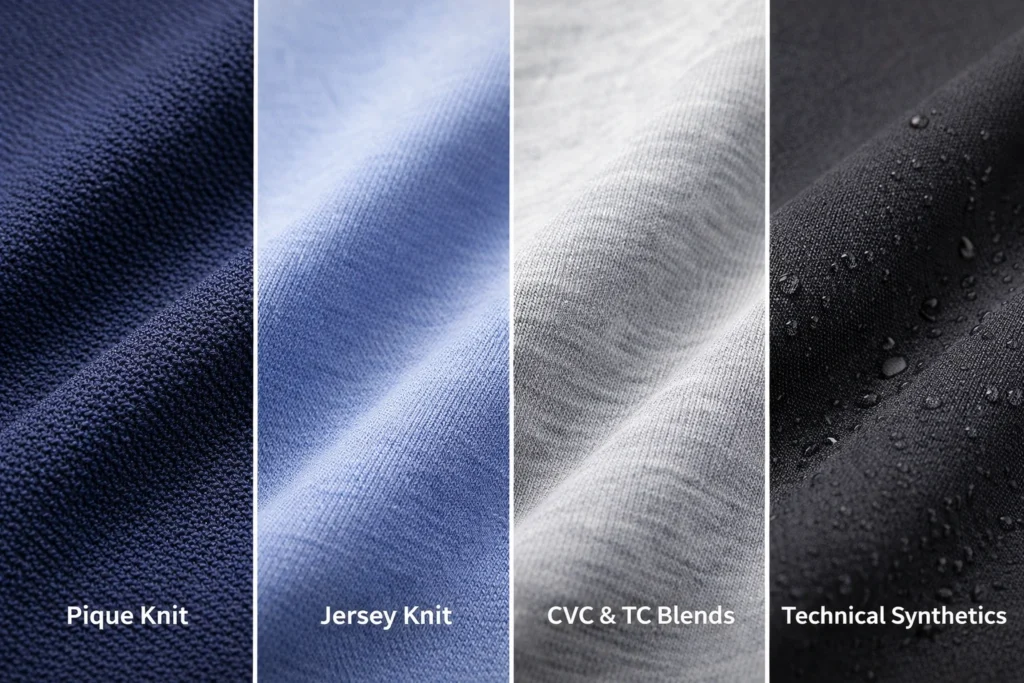
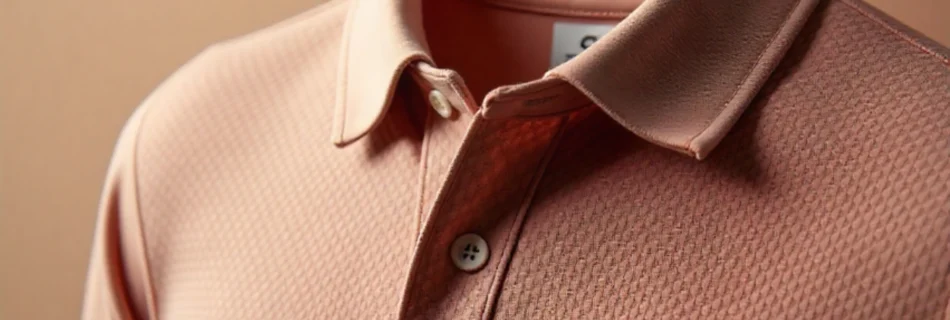
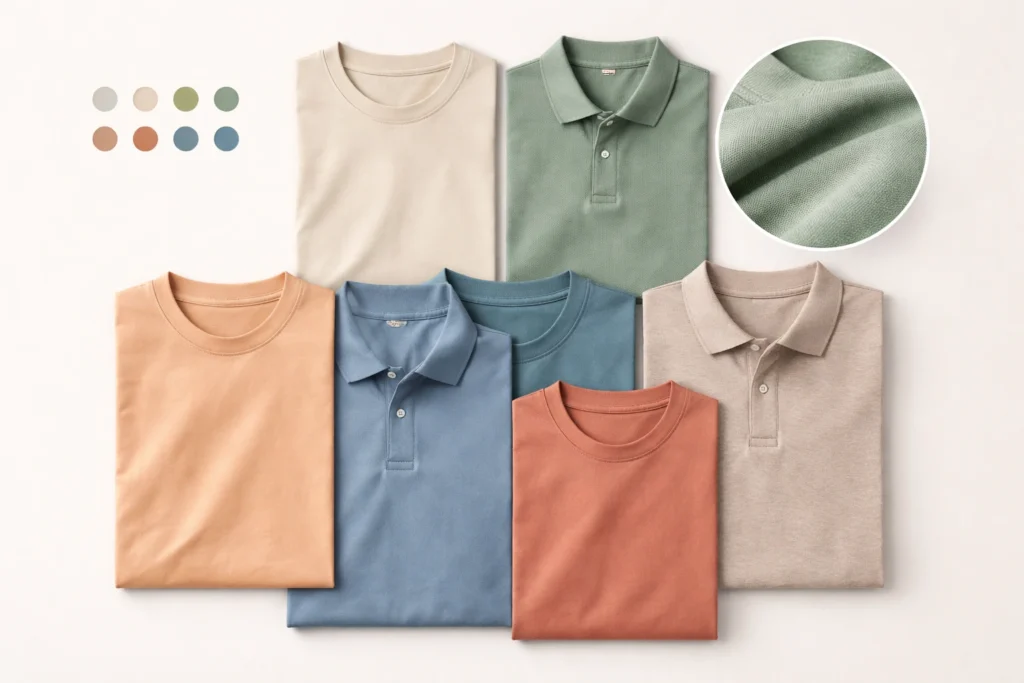
Colors appear differently depending on fabric type, texture, and weave. Many brands overlook how materials affect the visual impact of colors across T-shirts and polos.
Realistic examples:
- A trendy teal may appear vibrant on a synthetic blend (used in athleisure) but muted on soft cotton used for kids’ or baby apparel.
- Pique polo textures can make colors look uneven or darker than expected compared to smooth jersey T-shirts.
Why it matters:
- Inconsistent appearance reduces perceived quality.
- Visual mismatch across your product lines can confuse buyers or clients.
Practical solution:
- Approve colors per product type and fabric using physical product samples.
- Keep reference swatches for each fabric type to ensure repeatability.
- Align with suppliers on color expectations per material before scaling orders.
This approach ensures your apparel color trends translate accurately across all product categories.
Mistake 3 – Overcomplicating the Color Palette and SKU Management
Offering too many colors may seem attractive, but it creates exponential operational complexity. Every new shade increases SKUs, complicates product coding, care label management, and inventory tracking—especially at scale.
Problems that arise:
- Packing and fulfillment errors due to overlapping SKUs.
- Increased labor and administrative costs managing additional colors.
- Inventory tied up in low-performing shades.
Practical solution:
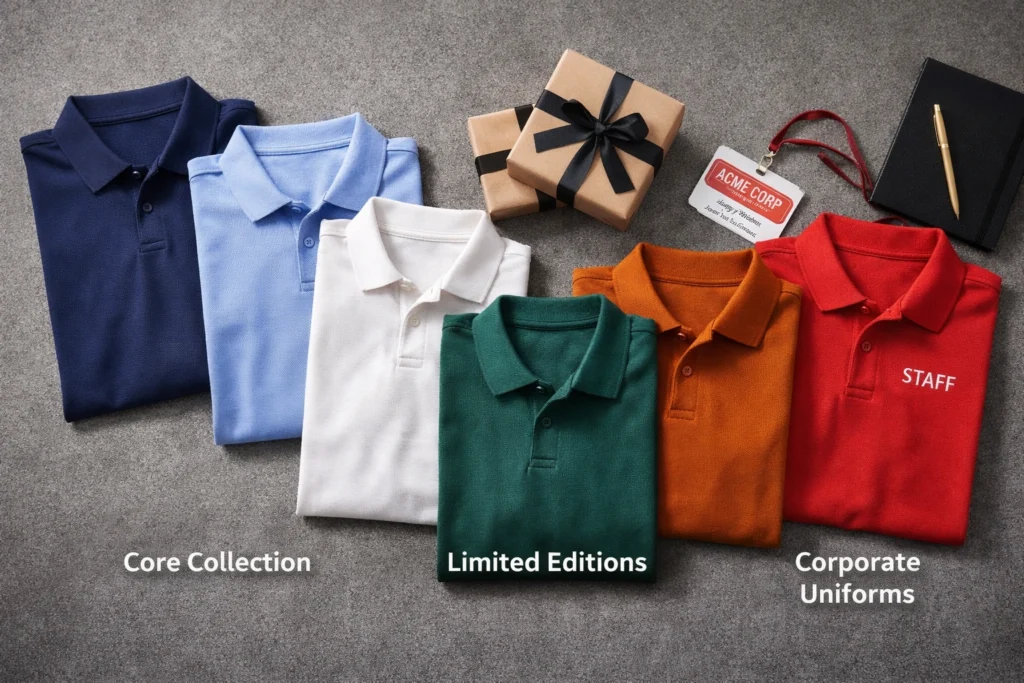
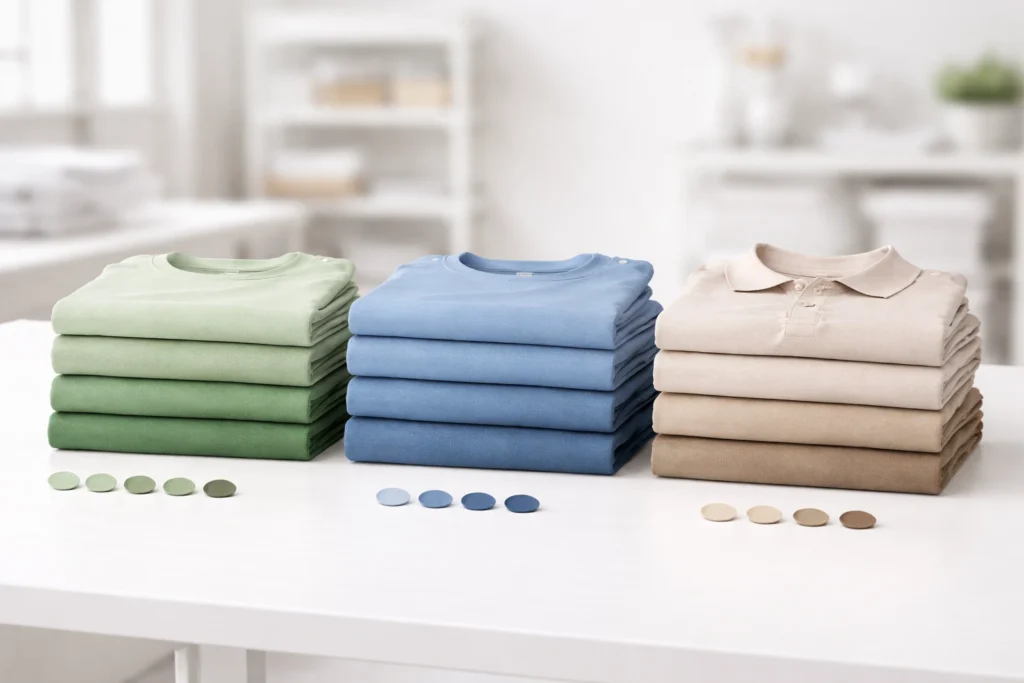
- Focus on 3–5 core colors for each product category.
- Introduce limited accent colors only where they provide a competitive edge.
- Use color strategically to differentiate key SKUs without overcomplicating operations.
This balance minimizes operational friction while maintaining flexibility for profitable apparel collections.
For brands focusing on polos, understanding how color decisions impact cost and scalability is critical. You can explore this further in our guide on profitable polo shirt manufacturing.
Mistake 4 – Failing to Plan for Repeat Orders
Scaling production isn’t just about the first batch—it’s about maintaining consistency over time. Trend-driven or unique colors might not be consistently available in future production runs, creating risk for repeat orders.
Challenges brands face:
- Difficulty sourcing identical materials for subsequent batches.
- Inconsistency in physical color standards between orders.
- Compromised client trust if repeated orders differ visually.
Practical solution:
- Standardize colors using physical reference swatches and documented approvals.
- Maintain clear records for each color in your product line.
- Confirm availability and consistency with your supplier before scaling.
By planning for repeatability, brands can ensure both operational efficiency and long-term customer satisfaction.
Mistake 5 – Relying Only on Digital Color References
Digital mockups, design files, and screen previews are convenient—but they rarely represent actual product colors accurately.
Problems caused by digital reliance:
- Colors appear different under store lighting or natural daylight.
- Buyers may reject products due to visual inconsistencies.
- Misalignment between design intent and production outcomes.
Practical solution:
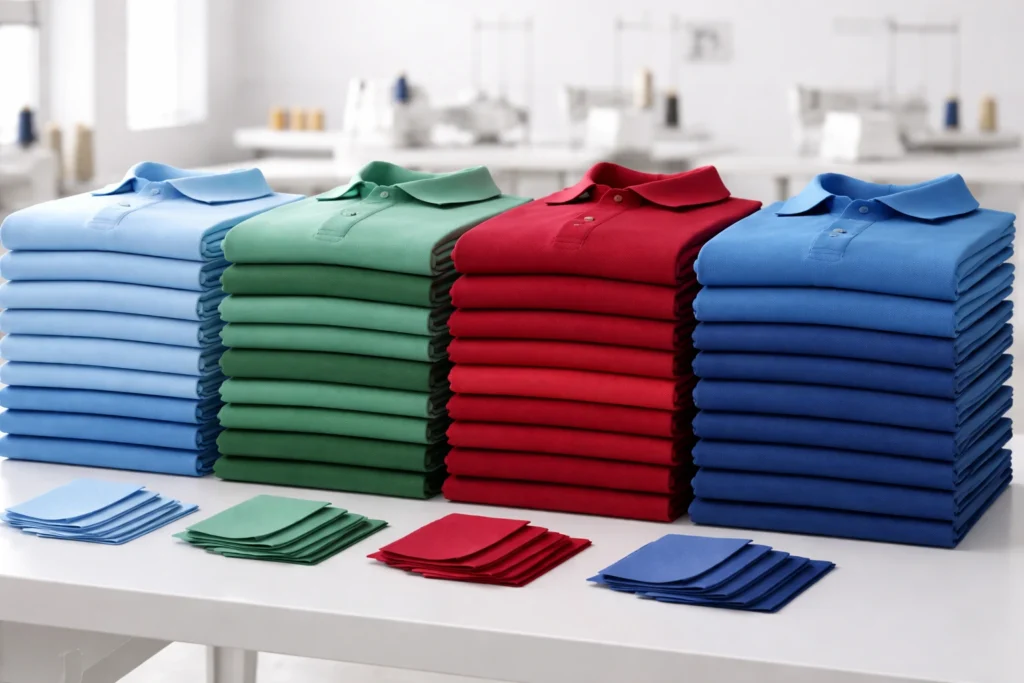
- Always approve colors using physical product samples.
- Check under multiple lighting conditions for realistic assessment.
- Use these physical references consistently for scaling T-shirt and polo orders.
This step reinforces Tris Apparel’s traditional manufacturing reliability, ensuring predictable and repeatable outcomes.
Mistake 6 – Weak Documentation and Manufacturer Communication
Even with correct color selection, insufficient documentation can derail production.
Common gaps:
- Vague tech packs or incomplete product specifications.
- Missing physical color references or SKU instructions.
- Misalignment on expectations between brand and factory.
Practical solution:
- Provide detailed tech packs, including color codes, swatches, and product specifications.
- Align regularly with manufacturers to confirm understanding.
- Document tolerances and standards clearly to avoid mistakes.
Strong communication ensures your scaling T-shirt and polo orders are executed consistently and efficiently.
Working with an experienced OEM apparel manufacturer can also help streamline documentation, align expectations, and reduce production risks during scaling.
How to Apply 2026 Color Trends Strategically
Rather than avoiding trends, brands should use them strategically while maintaining operational control.
Framework for success:
- Start with core colors: Maintain repeatable, reliable shades.
- Add trend colors selectively: Use 2026 color trends as accents or seasonal highlights.
- Align color with product type: T-shirts vs polos have different fabric and visual characteristics.
- Plan for future SKUs and repeatability: Ensure colors are consistently available for ongoing production.
By combining trend awareness with structured production planning, brands can scale efficiently while offering visually appealing and market-relevant collections.
Conclusion
Color mistakes are one of the most common and costly challenges when scaling T-shirt and polo orders. The brands that succeed in 2026 will not just follow trends—they will combine strategic color selection, physical approvals, and structured documentation to maintain consistency and profitability.
When colors are managed thoughtfully, brands can create scalable, trend-aligned apparel collections that support repeat orders, operational efficiency, and long-term growth.
Before scaling your T-shirt or polo collections, review your color strategy carefully.
Tris Apparel provides reliable, full-scale traditional manufacturing, strictly adhering to custom designs and physical color standards. Partner with us to ensure your collections are trend-aligned, consistent, and fully scalable—without compromising quality or operational efficiency.