Why Polo Shirt Manufacturing is a High-Return Category
Introduction
Stability is the silent partner of every successful clothing line. While many apparel categories depend on fleeting trends, polo shirt manufacturing provides brands with a grounded, strategic advantage. The polo shirt is unique—it sits in a wardrobe niche between casual T-shirts and formal button-downs, offering a combination of comfort, functionality, and professional appeal.
For brands, this translates into year-round demand, reduced design costs, and minimized inventory risk. Industry research shows that the global polo shirt market continues to grow steadily, reflecting strong demand across casualwear and uniform programs (Market Growth Reports).
By prioritizing polo shirt manufacturing, apparel companies can focus on efficient production, repeat customer engagement, and scalable operations, all while maintaining brand consistency. In this article, we explore the market and production reasons why polo shirts remain a reliable, high-return category for apparel brands.
- Introduction
- 1. Versatility in Polo Shirt Manufacturing Across Multiple Retail Segments
- 2. Stability in Clothing Production Cycles
- 3. Strong Repeat Purchase Behavior
- 4. Efficiency in Custom Garment Construction
- 5. Scaling Polo Shirt Manufacturing with Bulk Production
- 6. Strategic Fabric & Material Strategy
- 7. Maximizing ROI Through Seasonal Capsule Launches
- 8. The Product Manager’s Technical Checklist
- 9. Marketing & Brand Positioning Opportunities
- Conclusion
- Partner with a Manufacturing Expert
1. Versatility in Polo Shirt Manufacturing Across Multiple Retail Segments
One of the primary reasons polo shirts remain a profitable product is their remarkable versatility across market segments. A single well-designed pattern can serve multiple demographics with minor adjustments, such as fabric selection, color palette, or branding details. This versatility is a key factor in the profitability of polo shirt manufacturing.
- Corporate & Office Wear:
With offices increasingly adopting smart-casual dress codes, polo shirts offer a structured, professional look while remaining comfortable for all-day wear. They are easy to pair with chinos, skirts, or layering pieces, making them a staple for corporate uniforms or employee wardrobe programs. - Lifestyle & Casual:
Cotton and cotton-blend polos are ideal for weekend wear, travel, and casual events. They provide a polished appearance that a standard T-shirt cannot match, appealing to a wide age range and lifestyle segment. - Athletic & Performance:
Leveraging technical fabrics—moisture-wicking polyester, spandex blends, or breathable knits—brands can target sports, golf, or premium fitness markets. The same polo silhouette can serve both casual and performance-oriented customers, maximizing the ROI on one base pattern. - Uniform & Workwear:
The durability of polo shirts makes them a go-to choice for service industries, hospitality, delivery teams, and corporate uniform programs. This B2B segment provides a steady revenue stream, as businesses often order in large quantities and on a recurring basis.
Key Insight: A single polo shirt design can cross multiple market segments with minimal adjustments, making it a highly profitable apparel product in polo shirt manufacturing.

2. Stability in Clothing Production Cycles
Unlike fast-fashion items that demand frequent redesigns, polo shirts offer timeless design stability. The standard components—the ribbed collar, three-button placket, cuffed sleeves, and straight hem—have remained largely unchanged for decades. This consistency significantly reduces design risk, inventory risk, and production overhead.
Benefits for apparel brands focusing on polo shirt manufacturing include:
- Smoother Production Cycles:
Standardized patterns mean manufacturers can produce large quantities without compromising fit or quality. The same pattern can be used year after year with minor updates such as colorways or fabric changes. - Lower Sampling Costs:
Fewer prototypes are needed since the silhouette is already proven, reducing design and development expenses. - Predictable Margins:
Consistent sizing and construction help minimize errors and returns, ensuring more reliable profit margins.
By focusing on polo shirt manufacturing, brands can maintain a stable product line that is both efficient to produce and resilient to seasonal fluctuations.
3. Strong Repeat Purchase Behavior
Polo shirts are naturally habit-forming products. Once a customer finds a brand that fits them well, they tend to return repeatedly, purchasing multiple colors or replacing worn-out garments. This behavior makes polo shirts a reliable source of recurring revenue for apparel brands.
To understand how repeat purchases drive profitability in polo shirt manufacturing, consider the following table:
How Customer Behaviors Impact Polo Shirt Revenue
| Customer Behavior | Description | Benefit to Brand |
|---|---|---|
| Multi-Color Purchases | Customers buy 3–5 colors of the same fit after confirming sizing. | Increases average order value (AOV) and maximizes revenue per customer. |
| Replacement Cycle | Polos naturally wear out or fade over 12–18 months. | Generates predictable, recurring sales without additional marketing. |
| Seasonal Refresh | Limited edition or seasonal colorways alongside core shades. | Encourages repeat engagement while minimizing inventory risk. |
| B2B Bulk Orders | Corporate clients ordering for teams or events. | Large-volume sales with low acquisition cost and high repeat potential. |
Actionable Insight: By understanding customer repeat behavior, brands can plan inventory, colors, and promotions to maximize profitability from polo shirt manufacturing.
4. Efficiency in Custom Garment Construction
From a production standpoint, polo shirts strike a balance between technical complexity and efficient manufacturing. They are sophisticated enough to feel premium but standardized enough to allow scalable production.
Key advantages for brands utilizing polo shirt manufacturing include:
- Consistent Fit Architecture: A master pattern ensures every size behaves consistently across fabrics, reducing returns and complaints.
- Quality Control Reliability: Standardized construction (collar, placket, sleeve cuffs, hem) simplifies QC inspections and minimizes production errors.
- Strategic Detailing: Brands can differentiate without altering base production by adding subtle enhancements such as reinforced stitching, branded buttons, or side placket tape.
Takeaway: Efficient, repeatable construction supports scalability, reduces waste, and enhances customer satisfaction in polo shirt manufacturing.
5. Scaling Polo Shirt Manufacturing with Bulk Production
Once a brand identifies a successful polo design, bulk production becomes highly advantageous. Polo shirts are particularly well-suited for large orders due to their standardized materials and construction.
For many apparel brands, scaling production often involves working with an experienced OEM apparel manufacturer that can manage bulk orders while maintaining consistent specifications across large production runs.
Benefits of scaling bulk polo shirt manufacturing include:
- Optimized Fabric Yield: Using professional marker software reduces fabric waste, lowering material costs.
- Lower Per-Unit Labor Costs: Sewing lines become faster and more efficient with repetitive operations.
- Consistent Color Lots: Bulk dyeing ensures that all garments in a colorway match precisely, essential for multi-channel retail distribution.
- Supply Chain Stability: Bulk sourcing of buttons, collars, and fabrics protects brands from unexpected price fluctuations or material shortages.
Insight: Bulk production of polo shirts allows brands to maximize economies of scale while maintaining consistent product performance.
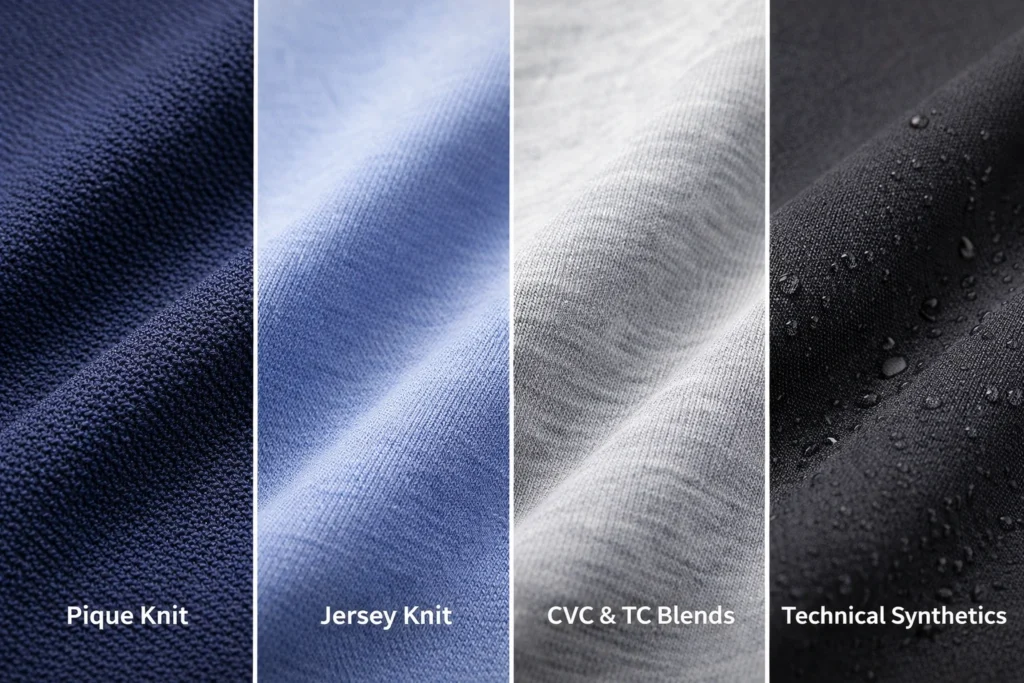
6. Strategic Fabric & Material Strategy
Material selection impacts brand positioning, garment performance, and profitability. Different fabrics provide different experiences for customers and opportunities for brands to segment their market.
- Pique Knit: The classic polo texture, breathable and durable, ideal for casual and office wear.
- Jersey Knit: Soft and smooth, suitable for high-end leisure or premium lifestyle polos.
- CVC & TC Blends: Wrinkle-resistant and durable, perfect for uniforms and corporate apparel that undergo industrial washing.
- Technical Synthetics: Moisture-wicking or stretchy fabrics cater to athleisure and performance markets, allowing brands to tap into trending sportswear segments.
Key Takeaway: Choosing the right fabric reinforces brand identity and customer satisfaction while supporting operational efficiency in polo shirt manufacturing.
7. Maximizing ROI Through Seasonal Capsule Launches
Even a staple like the polo shirt can be used to generate excitement and drive incremental revenue. By treating polos as a canvas for seasonal stories, brands can maintain high sales volume while minimizing inventory risk.
Seasonal updates are also influenced by broader market movements. Apparel brands often study emerging color palettes, fabric preferences, and consumer behavior before refreshing their collections. For example, insights from polo shirt trends for 2026 can help brands align new colorways and styling updates with current market expectations.
Approaches include:
- Seasonal Color Palettes: Keep 70% of inventory in core colors (navy, white, black) and 30% in seasonal accent colors to create urgency and refresh customer interest.
- Limited Edition Trims: Subtle details like button thread color, inner placket lining, or hem tape can signal exclusivity without changing the base pattern.
- Collaborations: Co-branded projects or artist partnerships can boost engagement and create additional revenue streams.
Actionable Insight: Seasonal capsules enhance ROI while preserving the predictable performance of core polo styles.
8. The Product Manager’s Technical Checklist
A thorough checklist ensures that each production run meets brand standards and customer expectations:
Development Phase:
- Collar Engineering: Ensure the collar stands correctly and maintains shape after washing.
- Placket Reinforcement: Buttons and holes must remain centered and secure.
- Side Slits: Decide between a traditional tennis tail or a modern straight hem for style and comfort.
Sourcing & Logistics:
- Fabric Weight (GSM): Typically 180–220 GSM, adjusted for climate and use.
- Shrinkage Testing: Pre-wash tests for cotton fabrics to ensure consistent sizing.
- Lead Time Planning: Bulk production completed 4+ weeks before launch to ensure timely delivery.
Pro Tip: Following this checklist ensures consistent fit, durability, and repeat-purchase satisfaction in polo shirt manufacturing.
9. Marketing & Brand Positioning Opportunities
Polo shirts offer opportunities for strategic brand marketing and retail positioning:
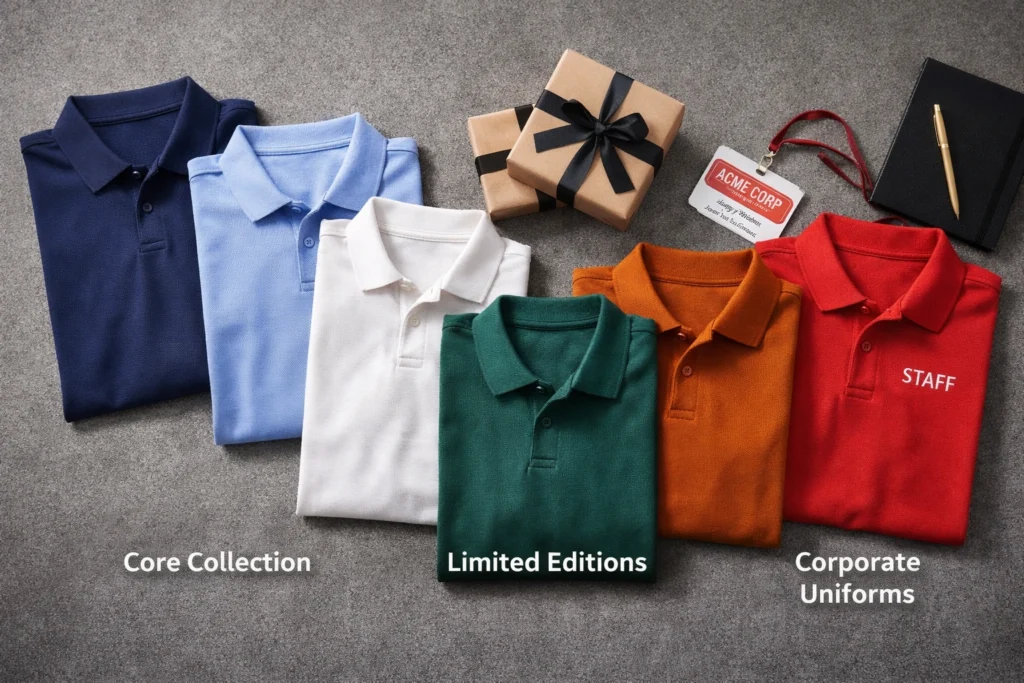
- Core Collection Anchors: Polos act as stable, reliable products around which other seasonal items can be marketed.
- Limited Releases: Small seasonal or special-edition runs can stimulate interest without risking dead stock.
- Corporate and Event Programs: Uniforms, team apparel, and branded merchandise provide additional B2B revenue streams with minimal customer acquisition costs.
Key Insight: Polo shirts bridge production strategy and marketing opportunities, allowing brands to maximize both sales and customer engagement through polo shirt manufacturing.
Conclusion
Polo shirt manufacturing represents one of the most profitable, stable, and scalable categories for apparel brands. Its versatility across retail segments, repeat-purchase potential, and bulk production efficiency make it an essential part of any product strategy.
By prioritizing precision construction, fabric selection, and seasonal planning, brands can build loyalty, maintain consistent revenue, and minimize risk. In a market dominated by fleeting trends, polo shirts provide a reliable foundation for long-term growth and profitability.
Partner with a Manufacturing Expert
At Tris Apparel, we specialize in polo shirt manufacturing with a scalable approach that helps brands turn concepts into repeat-purchase garments.
Whether your focus is kidswear, athleisure, or corporate uniforms, we provide the expertise to scale efficiently while maintaining brand consistency.
[Explore our Polo Manufacturing Services →]
Related posts:
 The Timeless Appeal of Polo Shirts: Manufacturing Insights for Brands and Corporate Uniform
 Polo Shirt Trends 2026: Key Styles, Fits, Fabrics & Market Direction for Brands
 Athleisure Trend: Why It’s Becoming the New Everyday Uniform
 Are Corporate and Team Uniforms Necessary? Insights for Modern Workplaces