Why Corporate Uniform Programmes Need a Long-Term View
Introduction
Corporate uniforms are often treated as a one-time purchasing requirement. A company selects a design, confirms the quantity, places an order and distributes the garments to its employees. Once the uniforms are delivered, the purchasing process may appear complete.
However, the actual requirements rarely stop there. Employees join and leave, departments expand, existing garments become worn through regular use, and businesses may introduce new teams or locations. As a result, companies often need additional uniforms or replacement orders throughout the year.
Without proper planning, these changes can create inconsistencies in garment colours, designs, sizing and overall presentation. They may also make repeat purchasing more complicated than necessary.
This is why a corporate uniform should be viewed as an ongoing business requirement rather than a single purchasing exercise. A structured approach to uniform planning helps companies maintain a consistent appearance, prepare for workforce changes and manage future orders more efficiently.
For HR departments, procurement teams and corporate uniform programme managers, taking a long-term view can make a meaningful difference to how uniforms are managed across an organisation.
- Introduction
- Key Takeaways
- 1. Maintaining Consistency Across Departments
- 2. Planning for New Employees and Workforce Expansion
- 3. Managing Employee Uniform Replacement
- 4. Making Repeat Purchasing More Efficient
- 5. Choosing an Apparel Manufacturer for Long-Term Requirements
- 6. Building a More Structured Corporate Uniform Programme
- Conclusion
Key Takeaways
- Maintain consistency: Standardised garment specifications, colours and branding help create a consistent corporate identity across departments.
- Plan for workforce changes: New employees, department expansion and staff transfers can create additional uniform requirements.
- Prepare for replacements: Regular wear and tear make replacement orders a normal part of uniform management.
- Keep proper records: Documenting approved samples, fabric details and previous orders makes future purchasing easier to coordinate.
- Choose a suitable manufacturing partner: Clear communication and production coordination help support ongoing uniform requirements.
1. Maintaining Consistency Across Departments
For companies with multiple departments, branches or operational teams, maintaining a consistent appearance requires more than selecting a uniform design at the beginning.
Different departments may have different garment requirements. For example, office employees may wear polo shirts, while operational teams may require T-shirts or other garments suited to their daily activities. Although the styles may differ, the overall corporate identity should remain recognisable.
A well-planned corporate uniform programme helps establish clear guidelines for these requirements.
Companies should consider standardising several elements:
- Colours: Establishing consistent company colours across different garment styles.
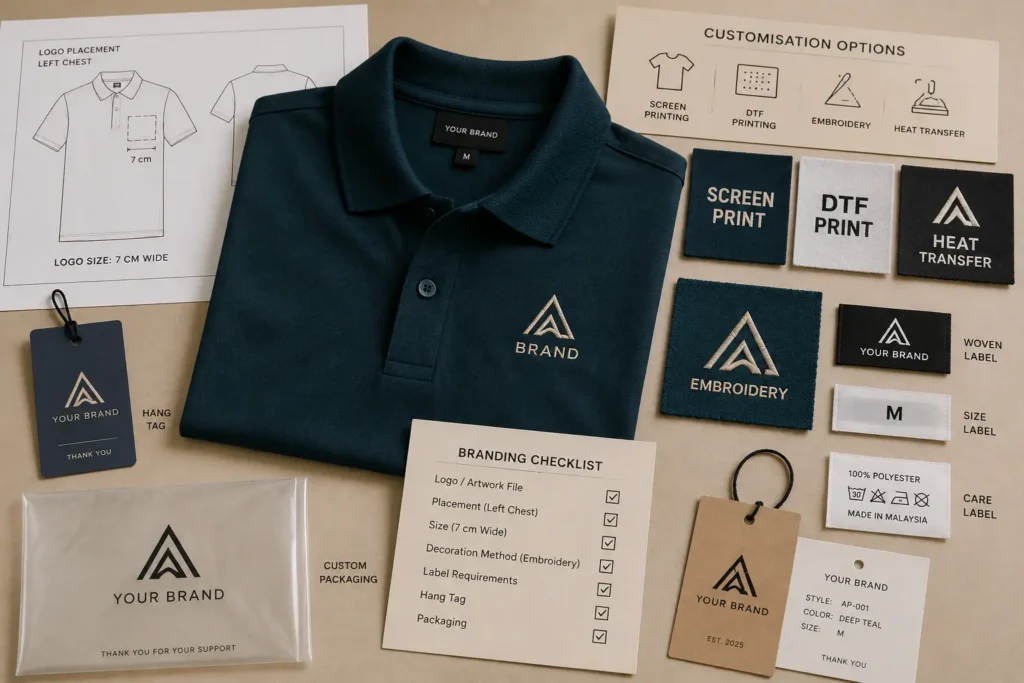
- Logo placement: Maintaining consistent positioning, sizing and embroidery or printing specifications.
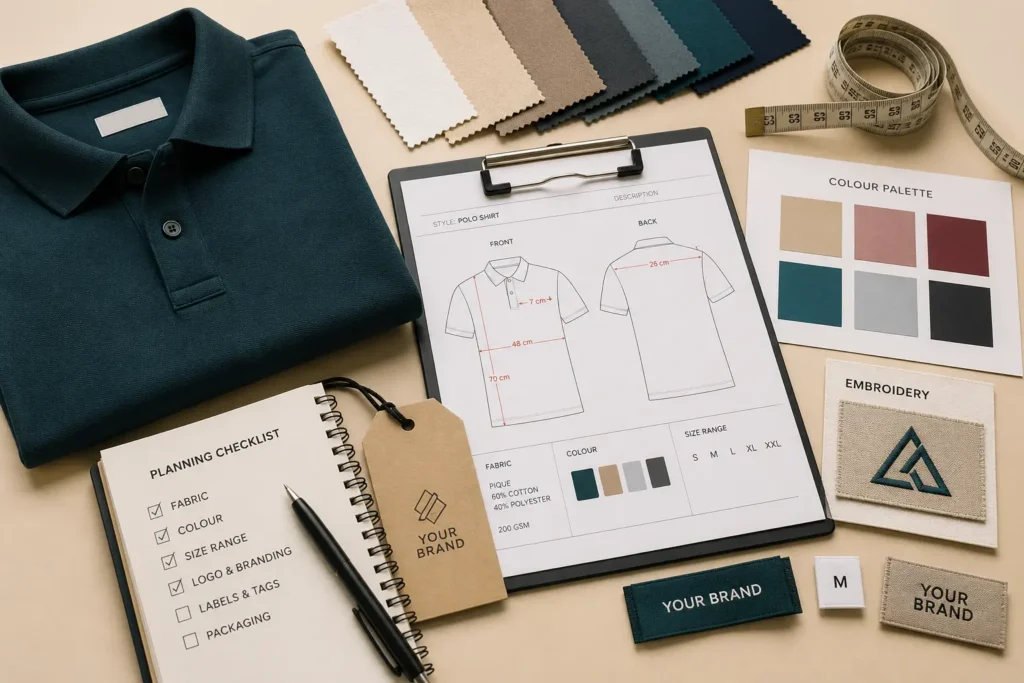
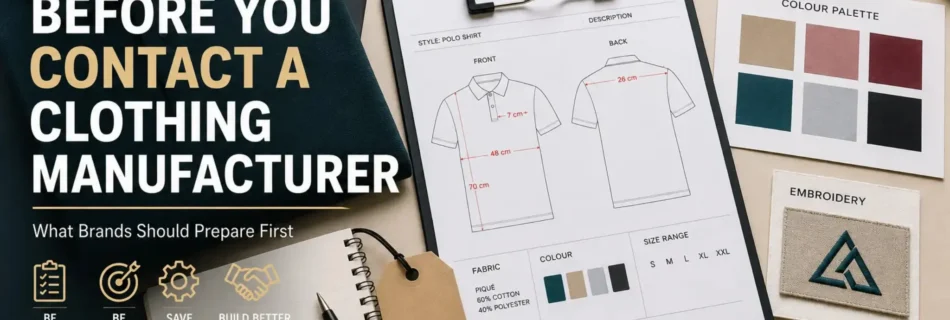
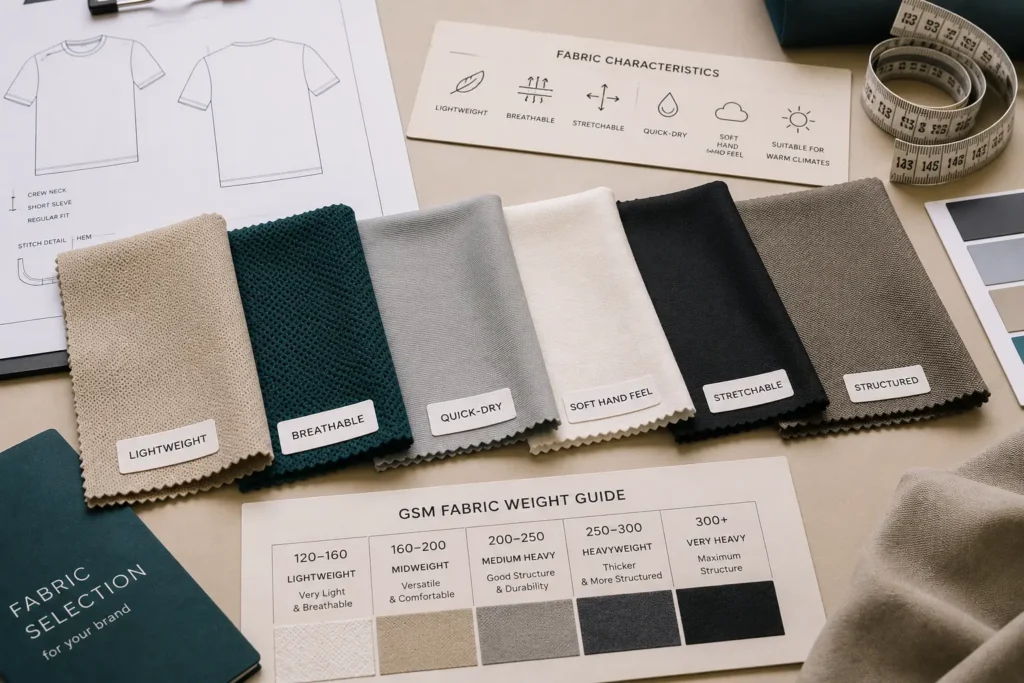
- Garment specifications: Recording fabric types, GSM, garment measurements and construction details.
- Sizing: Using a consistent size chart to help manage orders across departments.
- Design details: Keeping approved collar styles, sleeve details, trims and other garment features consistent.
These details become particularly important when different departments place orders at different times.
For instance, a company may initially order uniforms for its administrative team before introducing uniforms for its warehouse or customer service staff several months later. If each order is managed independently without referring to the original specifications, the final garments may not look consistent.
Through proper corporate uniform management, companies can maintain a central record of approved designs and specifications. This gives procurement teams a useful reference when arranging additional orders.
The objective is not necessarily to make every employee wear exactly the same garment. Instead, it is to ensure that different uniform styles still represent a consistent company identity.

2. Planning for New Employees and Workforce Expansion
Employee numbers naturally change over time. New staff may join, existing employees may transfer between departments, and companies may expand their operations.
These changes create additional uniform requirements that may not have been included in the original order.
For example, a company that initially purchases 200 polo shirts may need additional pieces when it recruits more employees. Similarly, opening a new branch or introducing another department may require a separate batch of uniforms.
This is where workforce planning and uniform purchasing should work together.
Rather than ordering uniforms based only on the current headcount, companies can consider their expected staffing requirements and the possibility of future expansion.
A practical corporate uniform management process may include:
- Reviewing employee headcount by department.
- Estimating the number of new employees expected to join.
- Keeping a record of uniform quantities distributed.
- Identifying departments that may require additional garments.
- Maintaining a reasonable quantity of available stock where practical.
The number of uniforms required will also depend on the nature of the work. Employees who wear uniforms daily may need more sets than those who wear them occasionally.
For example, a company may provide each employee with several sets to allow for regular washing and rotation. This means that future uniform requirements should consider both employee numbers and the number of garments allocated per person.
Workforce planning should also account for uncertainty. Recruitment schedules, business expansion and employee turnover do not always happen exactly as expected.
The Chartered Institute of Personnel and Development (CIPD) explains that workforce planning involves assessing current and future workforce needs and reviewing those requirements as organisational circumstances change. A similar forward-looking approach can help companies prepare their uniform requirements.
By connecting uniform purchasing with workforce planning, businesses can make more informed ordering decisions instead of responding only when additional garments are urgently needed.
3. Managing Employee Uniform Replacement
Uniform replacement is another important part of maintaining a corporate uniform programme.
Garments experience regular wear through daily activities, washing and repeated use. Over time, colours may fade, fabric may become worn, and certain garments may no longer be suitable for continued use.
Replacement requirements also vary between employees and departments. Staff in physically demanding roles may experience different levels of garment wear compared with employees working in office environments.
For this reason, companies should consider replacement planning as part of their regular uniform purchasing process.
A structured approach to employee uniform replacement can include:
Reviewing garment condition
HR or department managers can periodically review existing uniforms to identify garments that need replacing. This helps companies understand their actual requirements rather than relying entirely on estimated quantities.
Keeping replacement records
Recording the number of replacement garments issued can help procurement teams identify recurring requirements and plan future orders.
Maintaining approved specifications
Replacement garments should follow the original approved specifications as closely as possible. This includes fabric composition, colour, GSM, measurements, logo placement and construction details.
Planning orders in advance
If replacement requirements are predictable, companies can arrange purchasing before employees run out of suitable uniforms.
One important consideration is fabric and colour consistency. A garment produced several months or years after the original order may not automatically look identical if the fabric source, dye lot or material availability has changed.
Therefore, businesses should retain their original garment samples and specifications where possible. Before proceeding with a repeat order, they can confirm whether the same fabric and materials remain available.
This step helps manage expectations and reduces the likelihood of unexpected differences between production batches.
Employee uniform replacement is not simply about purchasing more garments. It is also about preserving the appearance and practical requirements of the existing uniform programme.

4. Making Repeat Purchasing More Efficient
Repeat purchasing can become complicated when companies do not maintain proper records of their previous uniform orders.
Procurement teams may need to retrieve old quotations, confirm garment details, check logo artwork and clarify specifications with different departments. If the original information is incomplete, the purchasing process may need to start almost from the beginning.
This can be avoided through better documentation.
For a more organised corporate uniform programme, companies should maintain a central record containing:
- Approved garment designs and reference samples.
- Fabric composition, GSM and colour details.
- Garment measurements and size charts.
- Logo artwork and branding specifications.
- Previous order quantities and distribution records.
- Supplier information and production references.
- Previous quotations and agreed commercial terms.
Having these details readily available makes it easier to communicate future requirements to the apparel manufacturer.
It also helps procurement teams prepare more accurate requests when arranging bulk corporate uniform ordering.
However, repeat orders still require confirmation. Companies should not automatically assume that every previous specification remains available or that the same production conditions will apply.
Fabric availability, minimum order quantities, production capacity and lead times may vary depending on the garment and materials required.
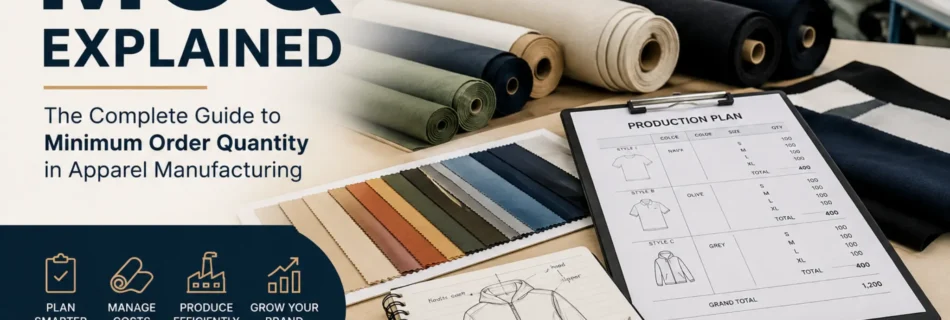
For example, a company may need only 30 additional pieces after its original order of several hundred garments. If the manufacturer’s minimum order quantity is higher than the requested quantity, the company may need to consider combining requirements across departments or planning a larger order.
Discussing these requirements early can help both parties identify a practical arrangement.
With clear records and regular communication, repeat purchasing can become a more organised process. It also gives companies a better basis for comparing future quotations and planning procurement budgets.
5. Choosing an Apparel Manufacturer for Long-Term Requirements
Selecting an apparel manufacturer is an important decision, particularly when a company expects to place repeat uniform orders.
While the initial quotation and production cost are important, they should not be the only considerations. Businesses should also assess whether the manufacturer can understand their specifications, communicate production requirements clearly and coordinate future orders.
When evaluating a corporate uniform supplier Malaysia, corporate buyers may wish to consider several factors.
Understanding of garment requirements
A manufacturer should be able to understand the intended garment style, fabric requirements, sizing and branding details before production begins.
Clear specifications help reduce misunderstandings between the purchasing team and production partner.
Fabric sourcing and availability
Fabric selection affects garment appearance, comfort, durability and overall cost. Companies should discuss suitable fabric options based on the working environment and intended use.
It is also useful to understand whether the selected fabric is readily available or needs to be sourced for each production order.
Sampling and specification approval
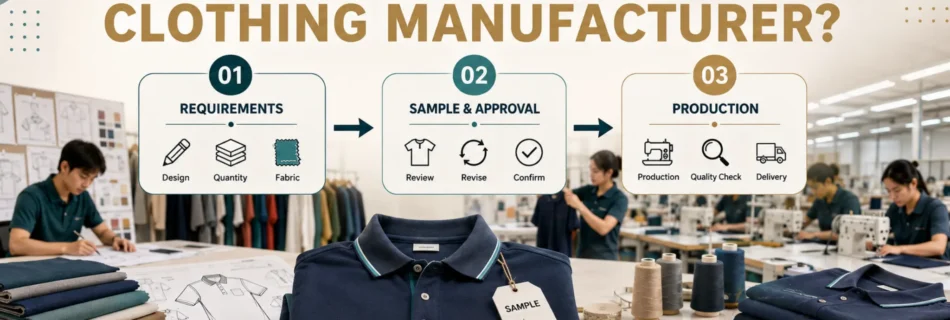
An approved sample provides a physical reference for the final garment. It allows the company to review fabric, measurements, construction and branding details before proceeding with bulk production.
Keeping an approved sample can also support future discussions about replacement and repeat orders.
Production coordination and quality checks
Clear communication during production helps both parties understand the agreed requirements and expected timeline.
Companies should ask how production specifications are communicated and how finished garments are checked against the approved requirements.
Communication for future orders
A suitable manufacturing partner should be able to discuss future requirements, including additional quantities, fabric availability and production lead times.
For businesses sourcing corporate uniforms in Malaysia, working with a local apparel manufacturing partner may also make communication and coordination more straightforward.
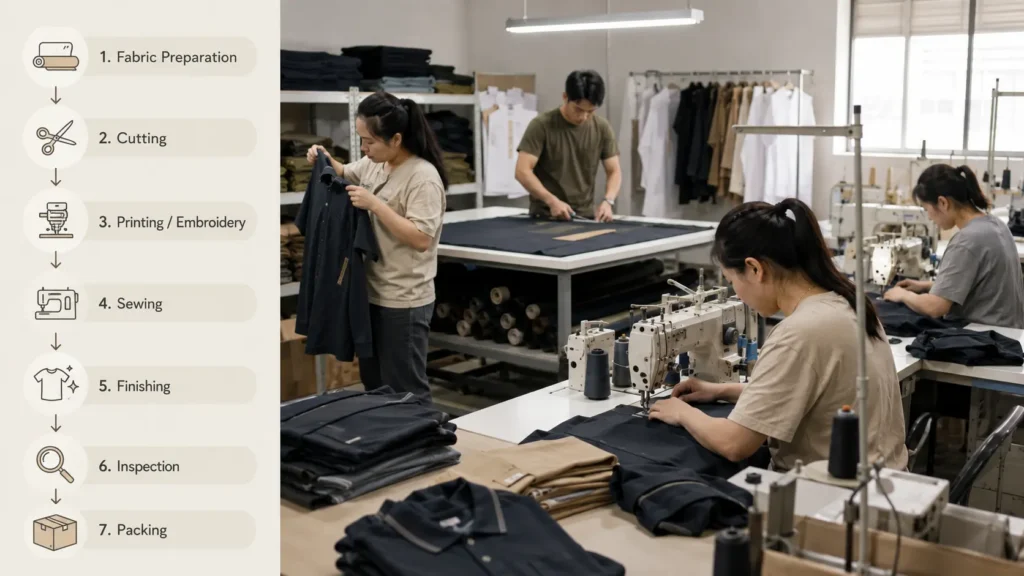
Tris Apparel Sdn. Bhd. supports businesses with OEM apparel manufacturing, fabric sourcing, sample development and production coordination. Its uniform range includes polo shirts, T-shirts and selected corporate apparel based on customer specifications.
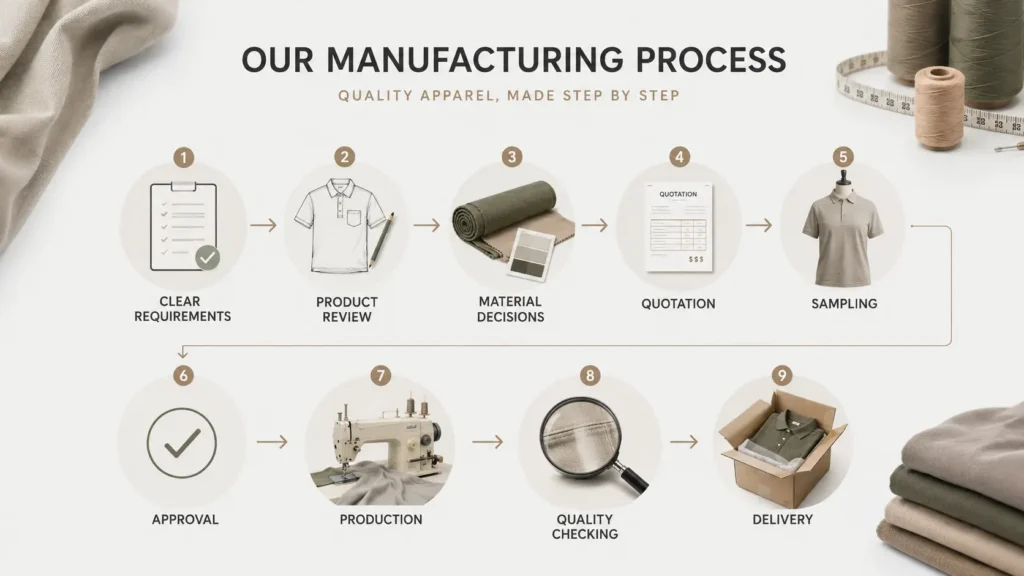
The aim is to support practical manufacturing requirements, from initial discussions and sample approval to bulk production and delivery.

6. Building a More Structured Corporate Uniform Programme
A long-term uniform strategy does not need to be complicated. Companies can begin with a few practical steps and improve their processes as their requirements develop.
The following checklist provides a useful starting point:
1. Establish standard uniform specifications
Document approved garment designs, colours, fabrics, measurements and branding details. This creates a reference for all future orders.
2. Assign responsibility for uniform management
Identify the department or person responsible for collecting requirements, maintaining records and coordinating purchases. This helps avoid different departments working with inconsistent information.
3. Review uniform requirements regularly
Review employee headcount, new recruitment needs, replacement requirements and available stock at suitable intervals.
4. Plan future purchasing requirements
Consider expected quantities, minimum order requirements and production lead times before placing additional orders.
5. Maintain communication with the manufacturer
Keep the manufacturing partner informed about possible future requirements. Early discussions can help identify material availability, production considerations and suitable ordering arrangements.
These steps help turn corporate uniform purchasing into a more organised business process.
They also give HR and procurement teams greater visibility over future requirements, making it easier to coordinate uniform distribution and manage repeat orders.
Conclusion
Corporate uniforms play an ongoing role in how employees represent a company. As organisations grow and workforce requirements change, their uniform needs will naturally develop as well.
Taking a long-term view helps businesses maintain consistency across departments, prepare for new employees, manage replacement garments and organise repeat purchasing more effectively.
A structured corporate uniform programme also creates a clearer working relationship between the company and its apparel manufacturer. With approved specifications, proper records and regular communication, future orders can be easier to coordinate.
Ultimately, successful uniform planning is not only about getting the first order right. It is about creating a practical approach that continues to support the organisation as its needs change.
Planning Your Company’s Next Uniform Order?
Tris Apparel Sdn. Bhd. supports businesses with OEM apparel manufacturing for corporate uniforms, including fabric sourcing, sample development and production coordination.
Contact Tris Apparel to discuss your corporate uniform requirements.