Apparel Product Development Beyond Production
Introduction
Many fashion startups and growing apparel brands spend significant time searching for the right factory. However, one common misconception still exists across the industry: manufacturers only become involved once production begins.
In reality, experienced manufacturers often contribute much earlier through apparel product development, helping brands refine ideas, select materials, improve designs, create samples, and prepare products for successful production.
For many brands, the success of a collection is determined long before the first bulk order is placed. Decisions made during the apparel product development process can affect product quality, production efficiency, profitability, and customer satisfaction.
As competition continues to increase across activewear, uniforms, children’s apparel, and fashion markets, brands are recognizing the value of working with an experienced apparel manufacturing partner that provides support beyond production.
This article explores how manufacturers contribute to clothing product development and why early collaboration can help brands build stronger products while reducing costly mistakes.
- Introduction
- Key Takeaways
- What Is Apparel Product Development?
- Why Product Development Matters More Than Many Brands Realize
- The Common Misconception About Manufacturers
- Fabric Sourcing Is More Than Finding Materials
- Design Evaluation Helps Prevent Costly Mistakes
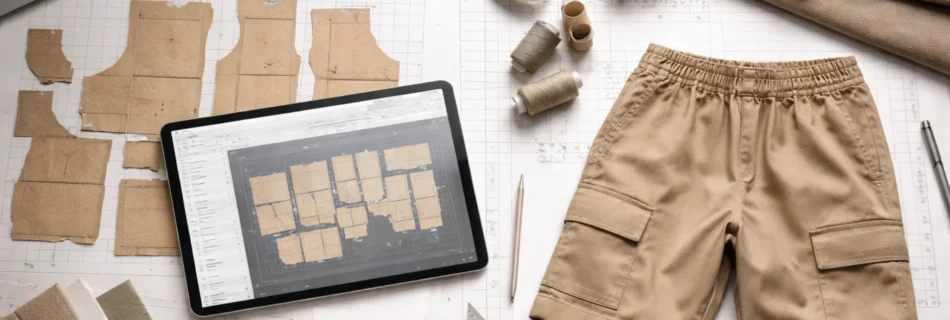
- Pattern Making Creates the Foundation for Success
- Sample Development Brings Concepts to Life
- Testing Helps Reduce Risk Before Production
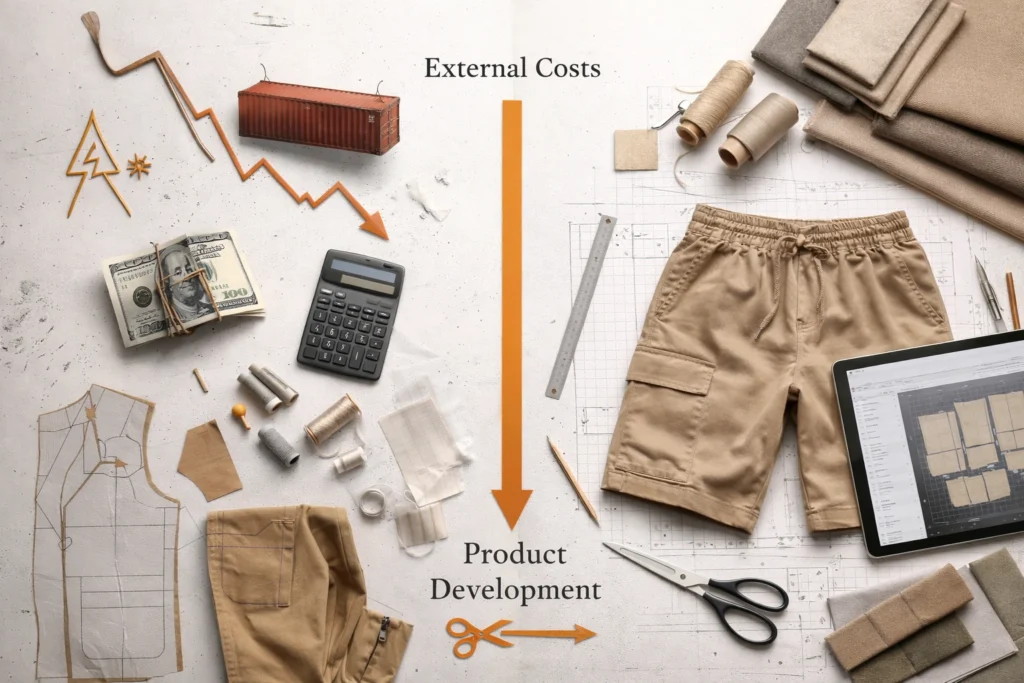
- Cost Engineering During Product Development
- Production Planning Begins Long Before Production
- Why Brands Benefit From Working With an Apparel Manufacturing Partner Early
- Choosing a Manufacturer That Supports Product Development
- The Future of Apparel Product Development Is Collaboration
- Conclusion
Key Takeaways
- Apparel product development begins long before bulk production and includes research, design, sourcing, sampling, testing, and planning.
- Manufacturers can add value early by recommending better fabrics, improving construction, and identifying production risks.
- Fabric sourcing, pattern making, and sample development are critical stages that influence fit, quality, and cost.
- Testing and cost engineering help brands avoid expensive mistakes and improve product performance before launch.
- Working with an apparel manufacturing partner early can lead to faster development, better quality, and smoother production.
What Is Apparel Product Development?
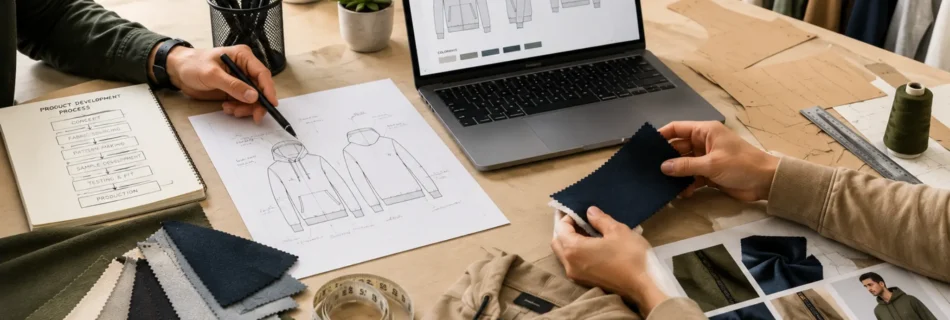
Apparel product development is the process of transforming a concept into a production-ready garment.
Rather than focusing solely on manufacturing, the process involves multiple stages that help ensure a product is commercially viable, technically feasible, and aligned with customer expectations.
A typical apparel product development process may include:
- Market research
- Concept creation
- Design development
- Fabric sourcing
- Pattern making
- Sample development
- Fit testing
- Cost analysis
- Production planning
Each stage plays an important role in determining whether a garment can be manufactured efficiently while meeting quality and performance expectations.
Although many brands focus heavily on design, successful garment product development requires balancing creativity with practicality. Products that look attractive on paper may still face production challenges if materials, construction methods, or costs are not carefully considered.
Brands that are new to the apparel industry can also explore additional industry product development guides to better understand how different development stages connect before production begins.

Why Product Development Matters More Than Many Brands Realize
Product development is often viewed as an additional expense. However, it frequently helps brands avoid far greater costs later.
When development stages are rushed or skipped, brands may encounter:
- Poor garment fit
- Excessive sample revisions
- Fabric performance issues
- Production delays
- Higher manufacturing costs
- Product returns and customer complaints
Conversely, a structured apparel product development process allows brands to identify problems early when changes are easier and less expensive to make.
For example, discovering a sizing issue during sample development is far more manageable than discovering the same issue after thousands of garments have already been produced.
As a result, effective apparel product development services often serve as a form of risk management rather than simply an additional step before manufacturing.
The Common Misconception About Manufacturers
Myth: Manufacturers Only Produce What Brands Design
Many startups approach factories with completed designs and expect production to begin immediately.
This assumption often comes from viewing manufacturers solely as production facilities rather than technical partners.
While some factories focus exclusively on production, many experienced manufacturers contribute valuable expertise throughout the clothing product development journey.
Reality: Manufacturers Often Improve Products Before Production
Manufacturers work with fabrics, patterns, sewing techniques, and production systems every day.
Because of this experience, they can identify practical improvements that designers may overlook.
Examples include:
- Recommending more suitable fabrics
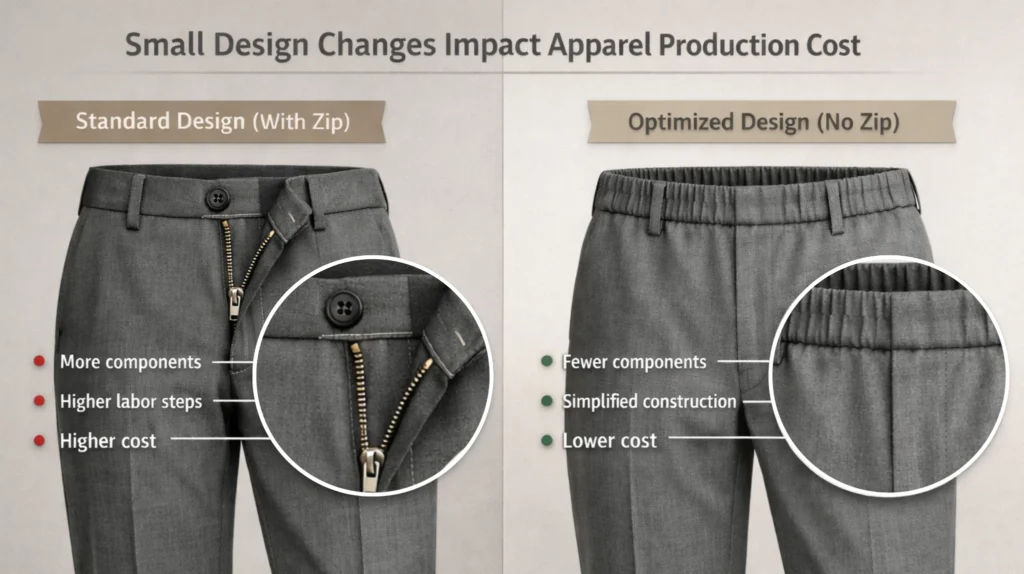
- Simplifying complex constructions
- Improving garment durability
- Reducing unnecessary production costs
- Enhancing comfort and functionality
These contributions help strengthen the overall garment product development process while reducing manufacturing risks.
Fabric Sourcing Is More Than Finding Materials
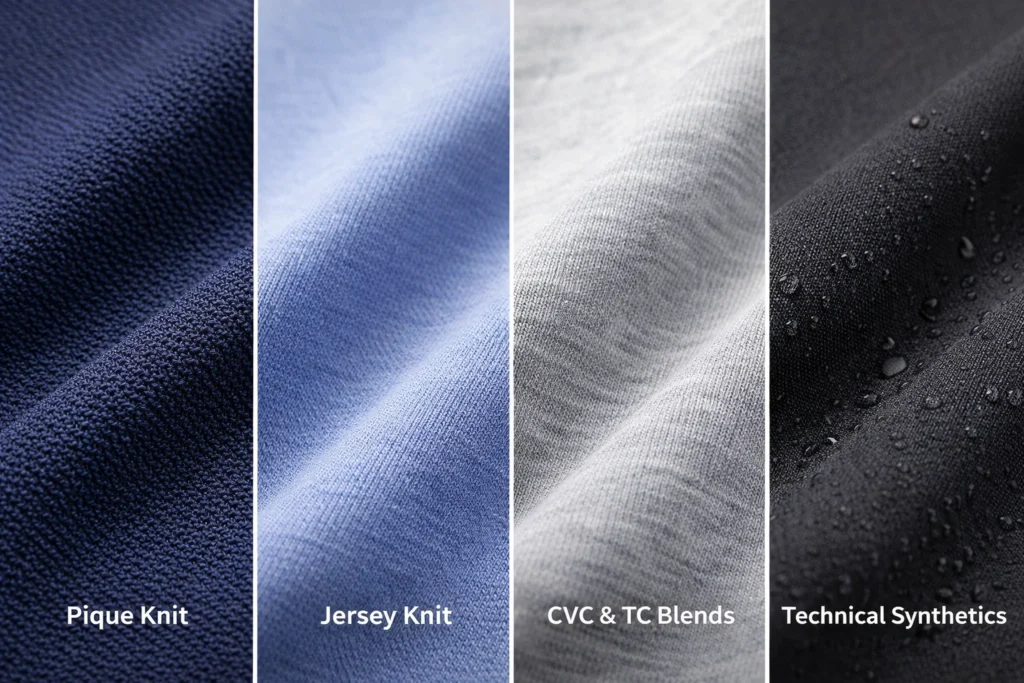
One of the most valuable areas of apparel product development services is fabric sourcing support.
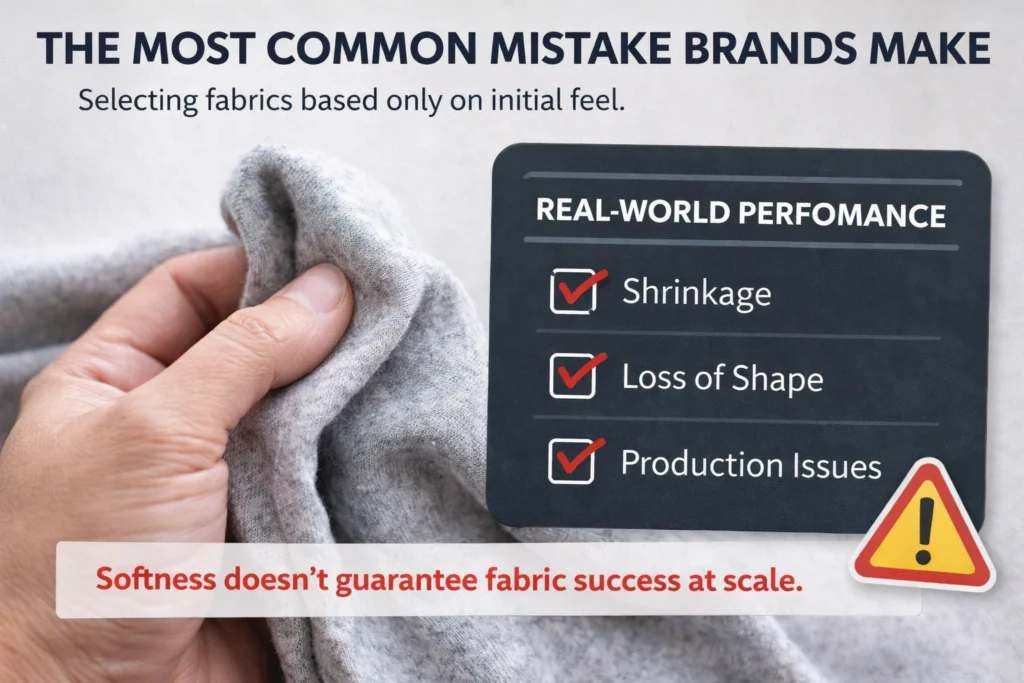
Many new brands focus primarily on fabric appearance. However, fabric selection affects far more than aesthetics.
The right fabric influences:
- Product performance
- Comfort
- Durability
- Production efficiency
- Cost structure
- Retail positioning
For example, an activewear brand may initially select a fabric based on softness. However, an experienced apparel manufacturing partner may recommend evaluating additional factors such as:
- Moisture management
- Stretch recovery
- Opacity
- Weight
- Abrasion resistance
Similarly, uniform brands often require fabrics that balance comfort with durability and easy maintenance.
During apparel product development, manufacturers can help brands compare material options based on both technical performance and commercial feasibility.

Design Evaluation Helps Prevent Costly Mistakes
Design sketches rarely tell the complete story.
A garment that appears simple may present unexpected production challenges when transformed into a physical product.
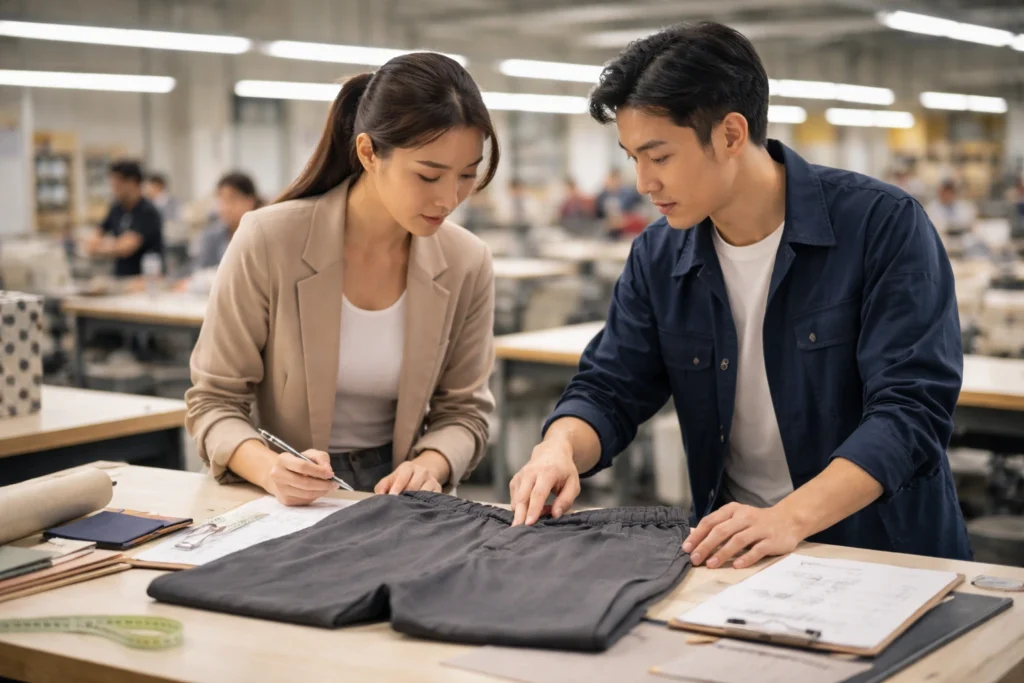
This is where manufacturer involvement becomes especially valuable during the apparel product development process.
Manufacturers evaluate:
- Sewing complexity
- Fabric compatibility
- Construction feasibility
- Trim availability
- Production efficiency
For example, a design featuring multiple decorative panels may significantly increase labor costs.
Likewise, certain fabric combinations may create sewing difficulties that affect quality consistency.
By identifying these challenges early, manufacturers help brands make informed decisions without compromising their design vision.
As a result, clothing product development becomes more efficient and predictable.
Pattern Making Creates the Foundation for Success
Even the best fabric cannot compensate for poor pattern development.
Patterns serve as the blueprint for every garment.
Accurate pattern making influences:
- Fit consistency
- Material utilization
- Production efficiency
- Customer satisfaction
Within the apparel product development process, manufacturers often assist with:
Pattern Creation
Converting design concepts into technical patterns suitable for production.
Fit Development
Adjusting garment measurements to improve comfort and functionality.
Size Grading
Scaling patterns into multiple sizes while maintaining consistent proportions.
This stage is particularly important for activewear, uniforms, and children’s apparel, where fit directly affects user experience.
Strong pattern development supports better garment product development outcomes and reduces the likelihood of extensive revisions later.
Sample Development Brings Concepts to Life
Sampling is one of the most critical phases of apparel product development.
Before committing to bulk production, brands need to evaluate how a garment performs in real-world conditions.
Several sample types may be used throughout the process:
Prototype Samples
Used to validate initial concepts.
Fit Samples
Focused on sizing and wearability.
Sales Samples
Used for presentations and buyer evaluations.
Pre-Production Samples
Final approval samples before manufacturing begins.
Each sample provides opportunities to identify improvements before larger investments are made.
Effective apparel product development services help brands use these stages strategically rather than treating sampling as a simple formality.
Testing Helps Reduce Risk Before Production
Product testing is often overlooked by emerging brands.
However, testing plays a major role in successful clothing product development.
Testing may include:
- Wash performance
- Colorfastness
- Dimensional stability
- Fabric durability
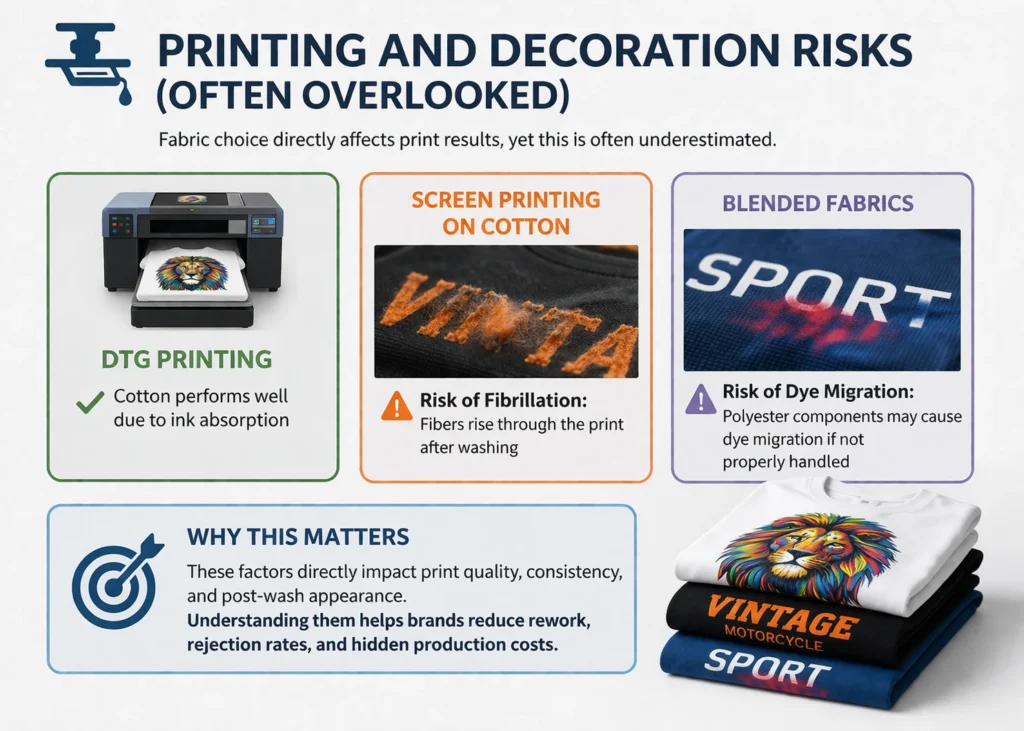
- Print durability
- Wear trials
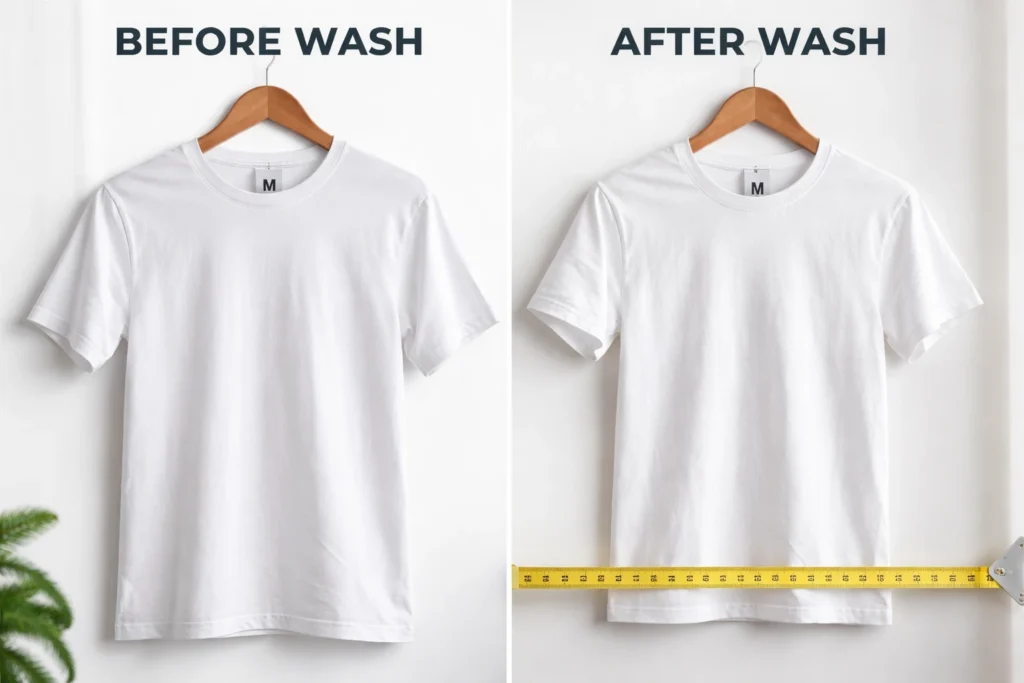
For example, a fabric that performs well during sampling may behave differently after repeated washing.
Identifying these issues before production can prevent customer dissatisfaction and protect brand reputation.
Testing standards developed by recognized textile organizations provide useful benchmarks for evaluating fabric and garment performance.
Cost Engineering During Product Development
Cost control should begin during development rather than after production starts.
Many brands establish retail pricing goals before understanding actual manufacturing costs.
An experienced apparel manufacturing partner helps bridge this gap.
Manufacturers can evaluate:
- Fabric costs
- Trim costs
- Labor requirements
- Packaging expenses
- Logistics considerations
When necessary, they may suggest alternatives that maintain product performance while improving cost efficiency.
Examples include:
- Alternative fabric constructions
- Simplified stitching methods
- More efficient trims
- Reduced material waste
These adjustments support profitable garment product development without sacrificing product value.

Production Planning Begins Long Before Production
Many people assume production planning starts once an order is confirmed.
In reality, planning begins during apparel product development.
Key considerations include:
Material Lead Times
Some fabrics and trims require several weeks or months to procure.
Capacity Planning
Manufacturing schedules must align with launch timelines.
Compliance Requirements
Certain markets require additional testing or documentation.
Seasonal Demand
Production schedules may be affected by industry peak periods.
By addressing these factors early, brands can reduce delays and create smoother production transitions.
Why Brands Benefit From Working With an Apparel Manufacturing Partner Early
Early collaboration offers several advantages.
Faster Development Cycles
Potential issues are identified sooner.
Better Cost Visibility
Manufacturing costs become clearer before production decisions are finalized.
Improved Product Quality
Technical expertise helps strengthen product construction.
Reduced Production Risks
Challenges are addressed before bulk manufacturing begins.
Stronger Long-Term Collaboration
Brands and manufacturers develop a shared understanding of expectations and objectives.
For growing brands, these benefits often contribute to more successful product launches and improved operational efficiency.
Choosing a Manufacturer That Supports Product Development
Not every factory offers comprehensive apparel product development services.
When evaluating potential partners, brands should consider asking:
- Do you assist with fabric sourcing?
- Can you support pattern development?
- What sample development services are available?
- Do you provide technical design feedback?
- Can you advise on production feasibility?
- How do you manage product testing and approvals?
The answers can reveal whether a manufacturer operates solely as a production facility or as a true apparel manufacturing partner.
The Future of Apparel Product Development Is Collaboration
As apparel markets become increasingly competitive, successful products rarely result from design alone. Instead, they emerge through collaboration between brands, suppliers, fabric mills, and manufacturers.
The most effective apparel product development process combines creativity with technical expertise. Manufacturers bring practical production knowledge, while brands contribute market understanding and product vision.
Together, these strengths help create garments that are functional, commercially viable, and ready for long-term success.
Conclusion
Apparel product development goes far beyond manufacturing. Fabric sourcing, pattern making, sampling, testing, and planning all shape the final product.
Brands that work with an experienced apparel manufacturing partner early often reduce risk, improve quality, and move into production with greater confidence.
At Tris Apparel, we support brands throughout the clothing product development journey with practical guidance and reliable manufacturing support.
Ready to start your next collection? Contact Tris Apparel today.