Introduction
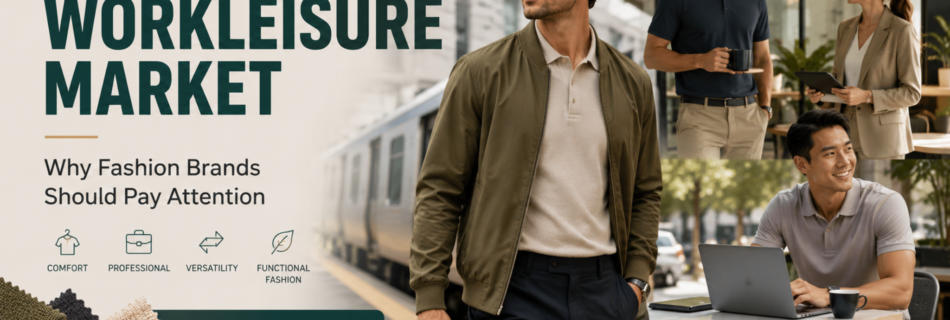
The way people dress for work has changed significantly in recent years. Traditional office clothing is no longer the default choice for many professionals. Instead, consumers are moving toward apparel that blends comfort, versatility, and a clean professional look.
This shift has created a growing demand for more adaptable clothing that works across multiple environments. As a result, the workleisure market continues to gain momentum across the global fashion industry.
Rather than treating clothing as “office-only” or “casual-only,” modern consumers now prefer garments that can transition between different parts of their daily lives.
For fashion brands, this shift represents more than a trend. It reflects a long-term change in how people define everyday dressing.
- Introduction
- Key Takeaways
- What Is the Workleisure Market?
- Why the Workleisure Market Is Growing Rapidly
- Why Fashion Brands Should Pay Attention
- Which Brands Are Benefiting Most?
- The Design Challenge Behind Workleisure Clothing
- Why Manufacturing Capability Matters
- Future Outlook of the Workleisure Market
- Conclusion
Key Takeaways
Before diving deeper, here are the main insights:
- Hybrid working has permanently changed clothing expectations
- Consumers prefer versatile, multi-purpose apparel
- Comfort and professional appearance must coexist
- The demand for modern workwear is expanding across categories
- Brands that adapt early may gain long-term product stability
- Fabric innovation plays a critical role in success
- Manufacturing capability directly impacts product performance
These points highlight why this category is becoming increasingly important for apparel businesses.
What Is the Workleisure Market?
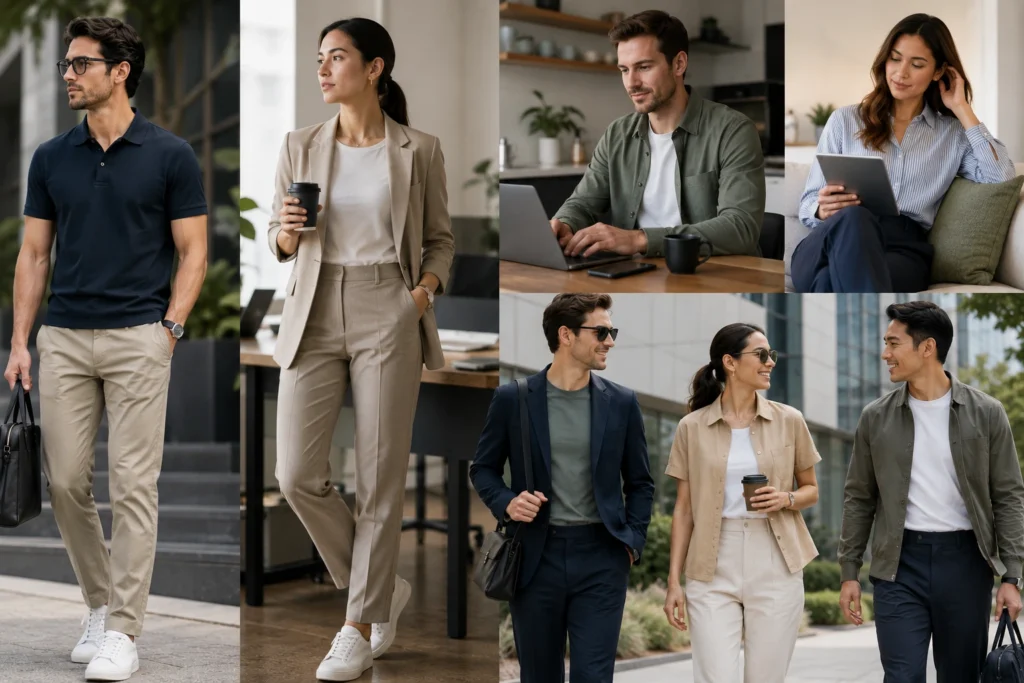
The workleisure market refers to apparel designed to bridge professional wear and casual clothing. It focuses on garments that are comfortable enough for daily movement but still structured enough for work environments.
Instead of separating officewear and casualwear, this category merges both into one functional wardrobe system.
Industry discussions describe workleisure clothing as a hybrid fashion category combining workwear and leisurewear, designed to support versatility across different daily contexts.
Textile Learner – Workleisure Clothing Overview
Common examples include:
- Structured polo shirts
- Stretchable trousers
- Relaxed blazers
- Wrinkle-resistant shirts
- Lightweight overshirts
- Functional everyday basics
A key idea behind this category is versatility. Consumers increasingly want clothing that can move easily between:
- office environments
- commuting
- remote work settings
- social activities
- travel
This “multi-use wardrobe” mindset is one of the strongest drivers behind hybrid work apparel today.
Why the Workleisure Market Is Growing Rapidly
Hybrid Work Has Redefined Daily Dressing
Flexible working arrangements have significantly changed how people view office clothing. Many professionals no longer dress formally five days a week, which reduces the need for traditional business attire.
Instead, they now prefer clothing that feels appropriate in both professional and informal settings. This shift has increased demand for practical and adaptable modern workwear that fits changing routines.
According to recent market research, the global shift toward hybrid lifestyles is one of the key drivers behind the growth of the workleisure and athleisure segment, showing steady expansion across multiple regions and consumer groups.
Cognitive Market Research – Athleisure and Workleisure Market Report
This reinforces that the category is not a short-term fashion trend, but part of a broader structural change in consumer behavior.
Comfort Is Now a Long-Term Expectation
Comfort-focused clothing is no longer considered temporary or trend-based. Once consumers experienced softer fabrics and relaxed fits, their expectations changed permanently.
However, comfort alone is not enough. Consumers still want garments that look structured and presentable.
This balance between ease and appearance is what makes workleisure clothing especially relevant today.
Minimalist Wardrobes Are Becoming More Popular
Another major factor is the rise of simplified wardrobes. Many consumers now prefer fewer pieces that serve multiple purposes instead of buying large quantities of trend-driven clothing.
This behavior supports demand for smart casual apparel that can be worn repeatedly in different situations without feeling repetitive or outdated.
As a result, versatility has become more valuable than variety.
Why Fashion Brands Should Pay Attention
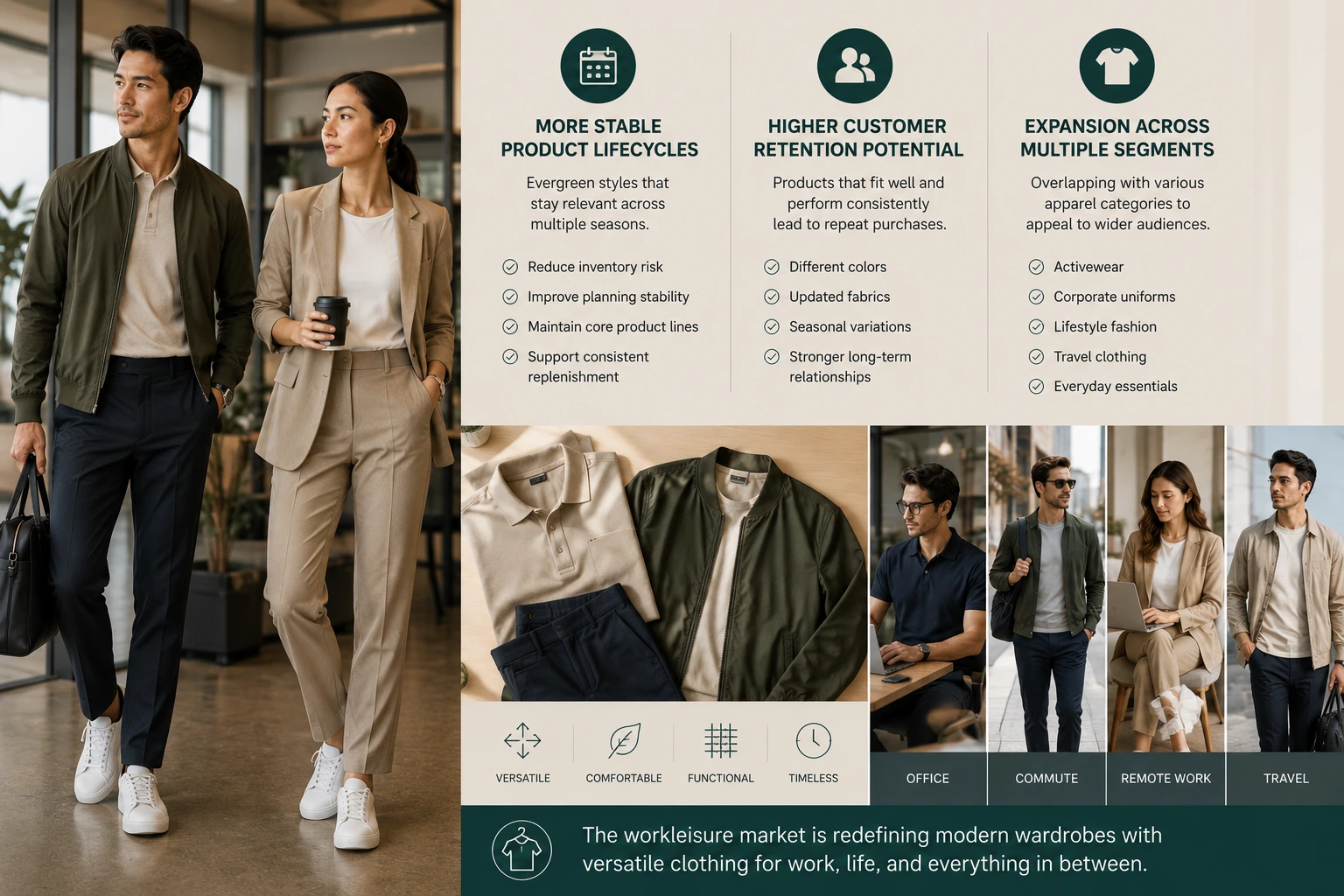
More Stable Product Lifecycles
Unlike fast-moving fashion trends, this category often includes evergreen products that remain relevant across multiple seasons.
Items such as polos, trousers, and lightweight jackets tend to have longer commercial lifespans.
This helps brands:
- reduce inventory risk
- improve planning stability
- maintain core product lines
- support consistent replenishment
Instead of constantly chasing trends, brands can build stronger foundational collections.
Higher Customer Retention Potential
Consumers are more likely to repurchase clothing that fits well and performs consistently.
When a product becomes part of someone’s daily routine, it often leads to repeat purchases in:
- different colors
- updated fabrics
- seasonal variations
This creates stronger long-term customer relationships compared to trend-based fashion cycles.
Expansion Across Multiple Apparel Segments
This category does not belong to one specific industry. It overlaps with several apparel segments, including:
- activewear
- corporate uniforms
- lifestyle fashion
- travel clothing
- everyday essentials
Because of this overlap, many brands are expanding their collections into more flexible categories that appeal to broader audiences.
The boundaries between clothing types are becoming less rigid over time.
Which Brands Are Benefiting Most?
Activewear Brands
Performance-based brands are naturally aligned with this trend. Their expertise in stretch fabrics and functional materials allows them to move into modern workwear with relative ease.
Fashion Startups
New brands often focus on essential, long-lasting products instead of seasonal trends. This makes them well-positioned to build collections around versatility and simplicity.
Uniform and Corporate Suppliers
Workplace dress codes are becoming more relaxed in many industries. Companies now look for uniforms that are comfortable, modern, and suitable for daily long-hour wear.
As a result, smart casual apparel is increasingly replacing traditional corporate uniforms.
The Design Challenge Behind Workleisure Clothing
Creating successful garments in this category requires careful balance.
Brands must ensure clothing performs well in three key areas:
- appearance
- comfort
- durability
This is often more complex than traditional fashion design because each element influences the others.
Fabric Performance Is Critical
Modern consumers expect clothing to offer:
- breathability
- stretch recovery
- wrinkle resistance
- lightweight structure
- long-term shape retention
However, combining all these features in one fabric is not always straightforward.
Some materials may feel comfortable but lose structure quickly. Others may look sharp but feel restrictive during movement.
This is why fabric selection plays a major role in product success.
Professional Appearance Still Matters
Even though comfort is important, consumers still expect clothing to look suitable for professional environments.
This means avoiding overly casual styling and focusing on:
- clean silhouettes
- balanced proportions
- subtle functional details
- refined finishing
The goal is not to eliminate formality but to modernize it.
Why Manufacturing Capability Matters
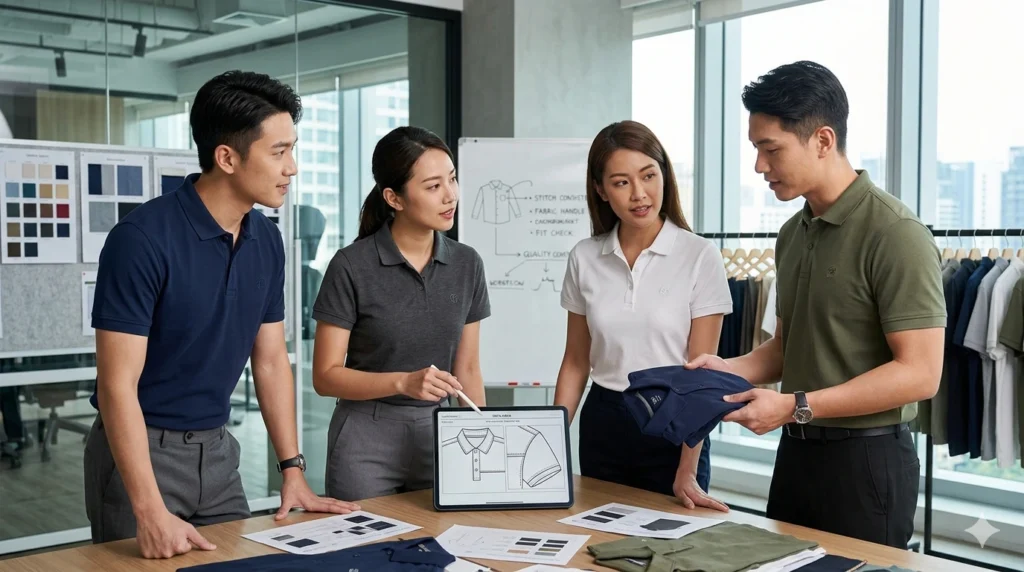
As products become more functional, production consistency becomes increasingly important in the modern apparel landscape.
Small variations in key production elements such as:
- stitching
- fabric handling
- fit execution
- material quality
can significantly influence the overall product experience and how the garment performs in real-world use.
This is why many fashion brands place greater importance on manufacturing partners who understand both design intent and functional garment requirements, especially in categories like modern workwear and corporate apparel.
Reliable production support helps ensure consistency across repeated collections and scaling phases, which is essential for maintaining brand credibility and customer satisfaction.
In many cases, this becomes a key factor in brand growth within the modern workwear category. It is also closely connected to how businesses evaluate the role of structured apparel in professional environments, including team identity and corporate presentation.
👉 Read more about this in our article on corporate and team uniforms in modern workplaces.
Future Outlook of the Workleisure Market
The evolution of workplace clothing is not a short-term trend. It reflects a deeper shift in lifestyle behavior.
Several long-term changes continue supporting this category:
- hybrid working models
- flexible office environments
- increased mobility in daily life
- minimalist consumption habits
- demand for practical clothing
As these trends continue, clothing categories will likely become more integrated rather than separated by strict labels like “formal” or “casual.”
Instead, consumers will prioritize function, adaptability, and comfort across all situations.
Conclusion
The workleisure market reflects a major shift in how people approach daily dressing. Rather than choosing between comfort and professionalism, consumers increasingly expect both in the same garment.
For fashion brands, this creates a meaningful opportunity to develop more versatile, long-lasting collections that align with modern lifestyles.
The growth of modern workwear and hybrid work apparel shows that clothing is becoming more functional and less category-restricted.
Brands that respond early to this shift may be better positioned to build stronger product foundations and long-term customer loyalty.
Brands looking to develop smart casual apparel, functional fashion, or hybrid work apparel collections may benefit from working with experienced manufacturing partners who understand both fabric performance and modern garment construction.